At Home Hair Color Tips I Learned the Hard Way
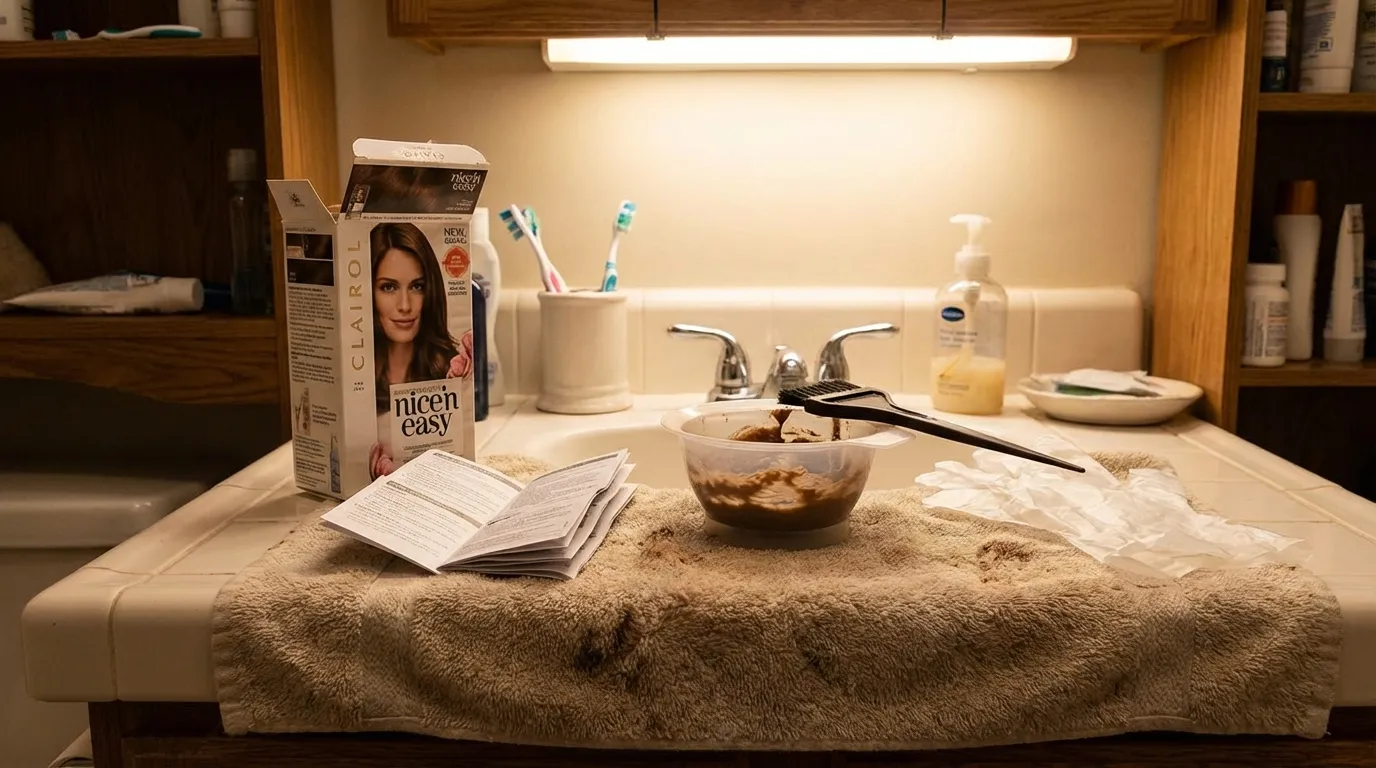
I was standing in the CVS hair color aisle at 8:45 PM on a Thursday, holding two boxes of Garnier Nutrisse in slightly different shades of brown, trying to match them to my roots under fluorescent lighting. My colorist wanted $180 for a touch-up. My toddler had just started daycare, which meant an extra $1,200 a month leaving our account. The salon appointment didn’t survive budget cuts.
So I picked the box that looked closest and drove home.
That was three years ago. I have done my own color roughly every six weeks since. The first time was a minor catastrophe. Everything after that got better. Here is what I wish someone had told me before I opened that first box.
The $12 Box vs. the $180 Salon Appointment
A single-process color at a mid-range salon runs $50 to $150 depending on your city, your hair length, and whether you want highlights or balayage. Add tip, and a color appointment clears $200 easily. A box of drugstore dye costs $8 to $15.
About 71% of women who color their hair now do it at home. Over a year of touch-ups every six weeks, that is roughly $100 in box dye versus $1,200 or more at a salon.
But the savings evaporate if you mess it up. A color correction at a salon averages $100 to $200 per hour, and corrections can take three to five hours. I know this because my first DIY attempt sent me to a salon two weeks later for a $375 fix.
What Went Wrong the First Time
I made every rookie box dye mistake at once. I picked a shade based on the model’s hair on the box instead of the color swatch on the side. I applied dye to my entire head instead of just the roots. I left it on ten minutes too long because I got distracted putting my kid to bed. And I skipped the patch test.
The result was a flat, muddy brown noticeably darker than my natural color with zero dimension. The previously highlighted sections grabbed the dye unevenly and turned a strange copper tone at the ends. My hair felt like straw.
Box dyes use a one-size-fits-all developer strength that is typically higher than what a colorist would use for your specific hair. That is why over-processing is so common. A salon colorist customizes the developer volume to your hair texture, porosity, and existing color. A box cannot do that. Knowing this changes how you approach the process.
At Home Hair Color Tips That Actually Work
After the initial disaster and the expensive correction, I committed to learning how to do this properly. Three years and about twenty applications later, here is what works.
Stay within two shades of your natural color. The single most important rule. Going dramatically lighter or darker with box dye is where disasters happen. If you want a big change, save for the salon. For root touch-ups and subtle shifts, box dye is fine.
Use the color swatch, not the model photo. The side of the box has a grid showing what the dye looks like on different starting colors. That grid is more honest than the glamour shot on the front.
Only apply to new growth on touch-ups. This was my biggest mistake. When you reapply dye to previously colored hair, you get color buildup that looks unnatural and damages the strand. Apply dye to the roots. Set a timer. Only pull color through the lengths in the last five minutes for a refresh.
Invest in a $5 application kit. A brush and bowl from Sally Beauty give you dramatically more control than squeezing dye from the bottle and smearing it with your hands.
Petroleum jelly on your hairline and ears. A thin layer of Vaseline prevents staining. Thirty seconds of effort saves you from walking around with a brown forehead for three days.
Do the patch test. I know. Nobody wants to wait 48 hours. But allergic reactions to hair dye are real, and they get worse with repeated exposure. The Cleveland Clinic recommends testing every single time, even if you have used the same product before.
The Brands Worth Buying
After trying more boxes than I should probably admit to, three drugstore brands consistently deliver good results:
Garnier Nutrisse ($8 to $10 at Target and Walmart). The built-in oils keep hair softer than most box dyes, and the color range is wide. My go-to for root touch-ups.
L’Oreal Excellence Creme ($10 to $12 at most drugstores). Better gray coverage than Garnier, and the conditioning treatment included in the box is surprisingly decent. This is the one I recommend if gray roots are your primary concern.
Revlon ColorSilk ($4 to $5 at Walmart and Amazon). The cheapest option that still works. No ammonia, which means less damage, though the color does fade a bit faster. Good if you are on a tight budget and coloring frequently.
When to Go to a Salon Instead
Box dye is a tool, not a replacement for a colorist. I do my own root touch-ups every six weeks at home and see a professional twice a year for anything more involved. That split saves me roughly $800 a year.
Go to a salon if you want to go more than two shades lighter or darker, if you are correcting a previous color mistake, if you want highlights or balayage, or if you are coloring over previously bleached hair. These require skills and products that do not come in a box.
If you are looking for a colorist you trust, our guide to finding a good hairstylist covers what to look for. And if you are trying to figure out which beauty expenses justify the splurge, our breakdown on where to save vs. spend has the full math.
The real lesson from my CVS aisle moment was not that box dye is bad. It is that box dye is a skill. Learn the skill, respect the limitations, and the $12 box does 80% of what the $180 appointment does. That remaining 20% is what the twice-a-year salon visit is for.