Perimenopause Skincare Routine: What Actually Changes
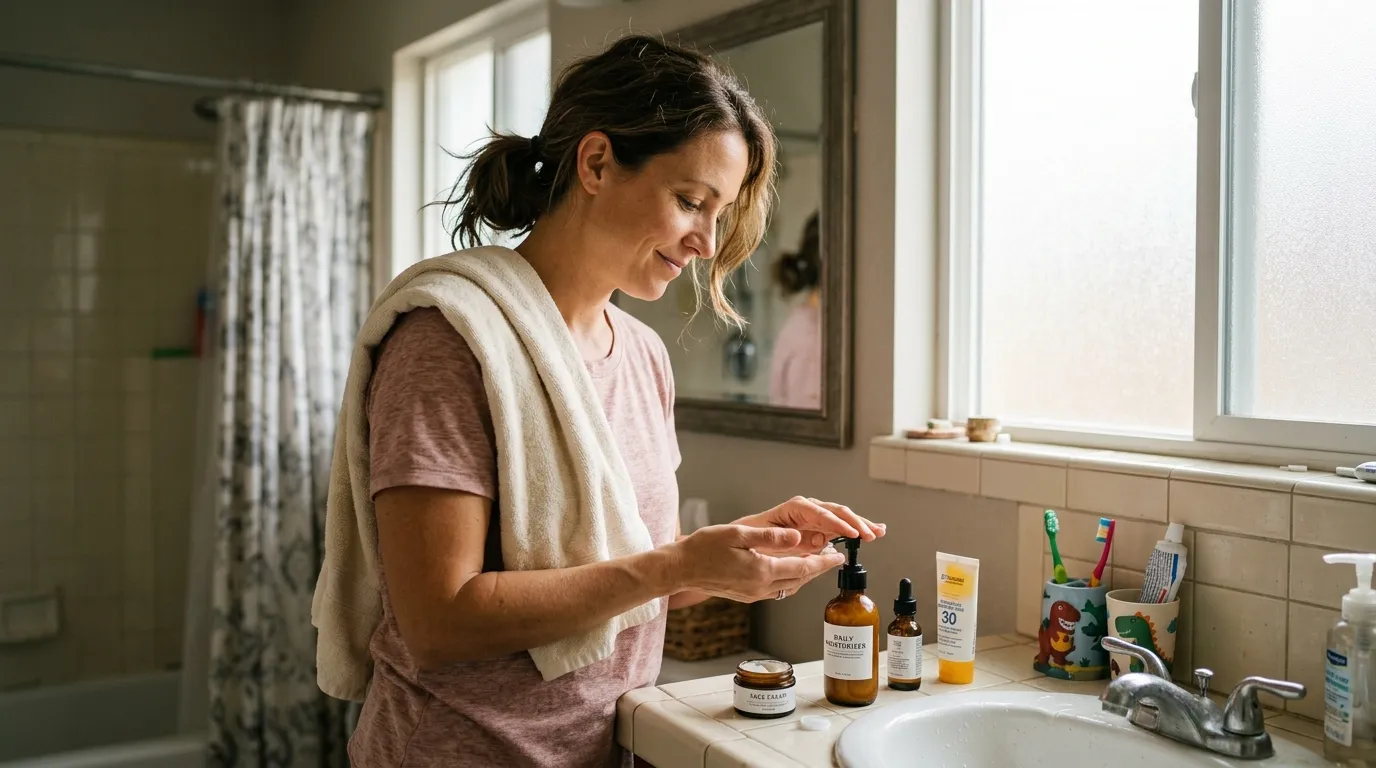
You are 43, and the routine that worked since college stops working in the same month you notice your part is wider. Skin that read combination now dries out by noon and breaks out by Thursday. The ponytail you have worn for a decade feels thinner in your hand. None of it is in your head, and none of it means your products went bad overnight. It means estrogen, and estrogen changes what your skin and hair need. A perimenopause skincare routine starts with understanding that shift, so here is what actually changes and the routine edit that fits a real week.
Perimenopause usually begins eight to ten years before menopause, often in the mid-40s, and lasts four years on average (Cleveland Clinic). The defining feature is not a smooth slide down. Estrogen surges and dips erratically, and your skin and hair feel every swing. That is the part nobody warns you about: the changes start years before your period stops, at the busiest moment of your life. Forty-seven percent of postmenopausal women say no one ever told them menopause would change their skin, hair, and nails (2025 review in the Journal of Cosmetic Dermatology).
Skin Changes in Perimenopause: The Three That Show Up First
Three changes arrive in roughly this order for most women.
Dryness that ignores the season. Estrogen keeps the skin’s water-holding machinery running. As it declines, sebum production falls by about 40% by your 60s, and the barrier loses ceramides, the lipids that hold moisture in, per a 2025 review in the Journal of Cosmetic Dermatology. The result is skin that feels tight by 3 PM, flakes at the temples, and stings when you use the foaming cleanser you have trusted since 2015.
The collagen cliff. Dermatologists use that phrase on purpose. In the first five years of perimenopause, skin loses roughly 30% of its collagen, New York dermatologist Melissa Levin told Allure. After menopause the decline continues at about 2% a year, from the collagen research of Brincat and colleagues, cited in the same 2025 review. Collagen is the scaffold under the skin. When it goes, the jawline reads differently, and no moisturizer can fix that part.
Acne, again, at 44. Adult-onset acne is most common in women going through menopause, per the American Academy of Dermatology. Fluctuating estrogen and stress-driven androgens stimulate the oil glands. You can be dry and breaking out at the same time. Perimenopause does both.
Perimenopause Hair Thinning: Why the Ponytail Feels Different
More than half of women will experience noticeable hair loss, and it most often shows up after 40 (Cleveland Clinic). The most common cause is female pattern hair loss, which typically begins in the 40s through 60s, per the AAD. The follicles shrink, so new hair grows in finer and shorter. The part widens. The temples recede. The ponytail gets smaller even though you are not losing handfuls in the drain.
That is the difference from postpartum hair loss, a sudden, dramatic shed that resets on its own. This one is gradual, and it does not reset, which changes the advice. Minoxidil, the foam sold over the counter, is the most-recommended treatment for female pattern hair loss (AAD). It takes six to twelve months to show results, it works only while you use it, and starting early matters more than the brand. A dermatologist can add spironolactone if minoxidil is not enough. Waiting a year to see if it gets better gives thinning a head start you cannot get back.
While you sort that out, keep the hair you have cared for: seasonal hair care rotation keeps products matched to the season, and no shampoo regrows hair, whatever the label promises.
The Best Moisturizer for Perimenopause Skin (and When to Upgrade)
Since the barrier is losing ceramides, the fix is to put ceramides back. Look for a moisturizer with ceramides and niacinamide, and apply it to damp skin so it locks water in. The workhorses are boring on purpose: CeraVe Moisturizing Cream, about $19 for a tub that lasts months, or Vanicream Daily Facial Moisturizer, about $14. Both do the barrier job without fragrance.
Upgrade when your skin drinks its moisturizer and still feels tight by mid-afternoon, or when makeup sits in patches. That is the moment for a heavier night cream or a peptide moisturizer, and it is a legitimate place to spend a little more. Cleansers are where you save: a gentle drugstore cleanser, about $12 to $16, is all this skin needs. The foaming gel you loved at 25 strips a barrier that is already working short-handed.
The Routine Edit That Fits a Real Week
You can keep the same five-minute structure. You just change three slots.
| Slot | What to use | Rough price |
|---|---|---|
| Morning | Gentle cleanser or water, moisturizer on damp skin, SPF 30+ | $12 to $41 |
| Night | Proper cleanse, retinol 2 to 3 nights a week, heavier cream | $9 to $19 |
| Hair | Minoxidil if thinning, daily; dermatologist visit early | about $30 a month |
Sunscreen is the non-negotiable, and it was before perimenopause too. UV damage breaks down collagen, the exact thing your skin is already losing faster. The Ordinary Retinol 0.5% in Squalane, about $9, is the most-studied collagen-building ingredient you can buy without a prescription. Start at two nights a week.
Perimenopause Beauty Tips: What Helps and What to Skip
Skip the collagen powders. There is very little evidence that drinking collagen moves skin collagen, per Allure’s dermatologist reporting. Skip biotin too: in AAD-reviewed studies, most hair supplements had no effect. One result with real data: a six-month study found thicker hair in women taking omega-3 and omega-6 fatty acids with antioxidants (AAD). Fish oil and your usual sunscreen beat a $60 gummy.
Sleep is not optional anymore. Cortisol from broken sleep speeds collagen breakdown, which is why the sleep and beauty connection matters more at 44 than it did at 24.
See a doctor when it goes beyond skin-deep. Cystic breakouts, a part that keeps widening, bald patches, or a painful scalp are dermatologist territory, not serum territory. And if hot flashes and wrecked sleep are running your life, that is a menopause hormone therapy conversation, which is a whole-body decision with skin as only part of it. Estrogen supports collagen and hydration, but no guideline recommends hormone therapy for skin alone, per the 2025 review.
Start With These Three
Ranked, in case you skimmed: wear SPF 30 every morning. Swap in a ceramide moisturizer, morning and night. Add retinol two or three nights a week. If your hair is thinning, book the dermatologist this month, not next year, because treatment works best at the first sign (AAD). Skip the collagen powders, skip the 10-step anything, and skip the guilt about skin that changed. It changed because your hormones changed. The routine can change with them, starting with the sunscreen and the moisturizer. Everything else is optional.