Teaching Kids Self-Care Without the Sephora Obsession
Your eight-year-old just asked for a 10-step skincare routine. She saw it on TikTok. She wants the retinol serum, the vitamin C drops, and the $48 moisturizer from Sephora. She is in third grade.
You are not the only parent having this conversation.
The “Sephora Kids” trend has turned tweens into the fastest-growing beauty consumer segment. Kids ages 6 to 12 and young teens spent nearly $4.7 billion on beauty products in 2023 alone, according to consumer research from aytm. A peer-reviewed study from Northwestern University found that skincare routines posted by tweens on TikTok contained an average of 11 potentially irritating active ingredients per routine. Dermatologists are seeing kids come in with irritative dermatitis caused by products designed for 40-year-old skin.
But here is the thing: wanting to take care of yourself is not the problem. The problem is when self-care becomes a shopping list.
Why Self-Care for Kids Is Not About Products
Somewhere between Instagram ads and influencer hauls, self-care got rebranded as something you buy. Face masks, bath bombs, serums, supplements. For adults, it is hard enough to separate the habit from the purchase. For kids, the line barely exists.
Real self-care is brushing your teeth without being asked. It is drinking water. Going to bed on time. Talking about feelings instead of shoving them down. Moving your body because it feels good, not because you are “burning calories.” None of that requires a trip to the mall.
When your daughter says she wants a self-care routine, she is probably saying she wants to feel grown-up, spend time with you, or do something that makes her feel good. Those are great instincts. Your job is to channel them away from consumerism and toward habits that actually serve her.
Age-Appropriate Self-Care Activities for Kids
Not every self-care activity fits every kid. What works for a five-year-old will bore a twelve-year-old. Here is a rough breakdown:
Ages 4 to 6: Learning the basics. Washing hands, brushing teeth, picking out their own clothes, tidying their space. At this age, self-care is about building independence and feeling capable. Let them do it themselves, even when it takes three times as long.
Ages 7 to 9: Building awareness. Journaling (even just drawing how they feel), choosing healthy snacks, learning to take deep breaths when upset, basic hygiene routines they manage on their own. This is also the age where they start noticing what other kids have. Redirect the comparison: “What makes you feel good?” is a better question than “What do you want?”
Ages 10 to 12: Getting intentional. This is when kids can start understanding why they do certain things. Yoga or stretching, cooking a simple meal, setting screen time limits for themselves, skin care that is actually age-appropriate (gentle cleanser and sunscreen, full stop). They can also start recognizing marketing for what it is, and that is a self-care skill in itself.
The Modeling Problem (and Solution)
Kids absorb behavior, not lectures. If you spend twenty minutes on a skincare routine every night while telling your daughter she does not need products, she hears the contradiction loud and clear.
Research from Le Bonheur Children’s Hospital confirms what most parents already suspect: children whose parents practice healthy habits are significantly more likely to adopt those habits themselves. The reverse is also true. If your stress response is online shopping or a glass of wine, your daughter is taking notes.
This does not mean you need to be perfect. It means being honest. “I’m going for a walk because I had a hard day and moving helps me think” teaches more than any book about feelings. Let her see you drink water, go to bed at a reasonable hour, say no to plans when you are tired, and stretch in the living room. That is the curriculum.
Should You Let Your Kid Buy Skincare Products?
Banning everything beauty-related backfires. If you make all of it forbidden, it becomes more appealing. The goal is not to raise a kid who never touches a lip gloss. It is to raise a kid who understands the difference between fun and necessity.
Here is a framework that works:
Say yes when the product is age-appropriate, low-cost, and she sees it as play rather than fixing a problem. Flavored lip balm, press-on nails for a sleepover, a tinted sunscreen that makes her feel fancy. These are harmless. She is experimenting, and that is normal.
Redirect when the desire is rooted in insecurity or comparison. “Everyone at school has this” or “I need to fix my skin” from a nine-year-old are signals. That is not a product conversation. That is a feelings conversation. Sit with it. Ask questions. Find out what is underneath the request.
Say no when the product contains active ingredients that are wrong for young skin. Retinol, AHAs, BHAs, vitamin C serums, and anti-aging anything have no place in a child’s routine. This is not opinion. Dermatologists are clear on it: children’s skin is thinner and more sensitive, and these ingredients can cause rashes, allergic reactions, and even skin burns. A gentle face wash and SPF is all any kid needs.
Build Rituals, Not Routines
The word “routine” sounds like a chore. “Ritual” sounds like something you look forward to. The difference matters.
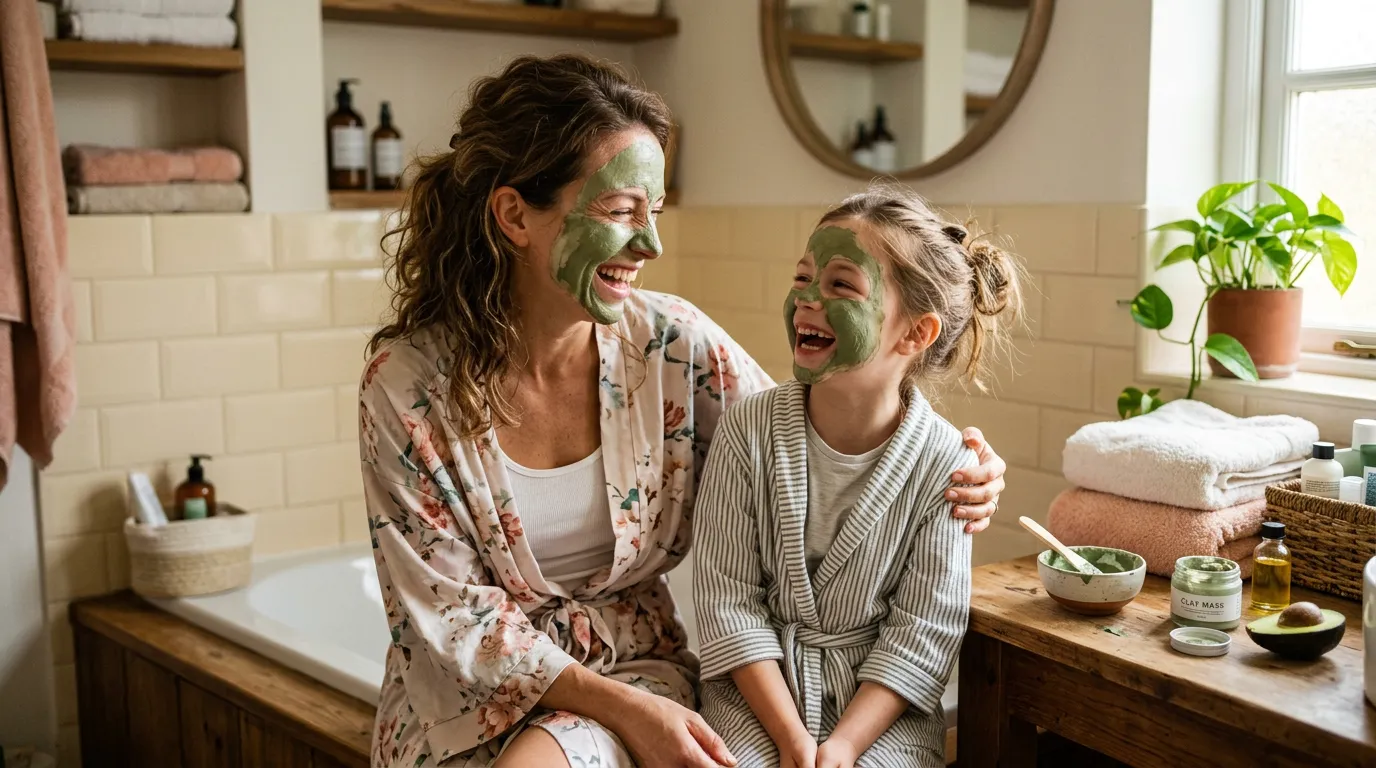
A Sunday night face mask with your daughter (the oatmeal-and-honey kind you make in the kitchen, not the $15 sheet mask) is a ritual. Painting each other’s toenails while talking about the week is a ritual. A morning dance party to shake off Monday dread is a ritual.
These moments teach her that self-care is about attention and connection, not products and performance. She will remember the kitchen face mask with you long after she forgets which serum was trending in fourth grade.
Teaching Kids Media Literacy About Beauty Marketing
By age ten or eleven, kids can start learning media literacy. This is one of the most valuable self-care skills you can give her, because it protects her long after she leaves your house.
Point out influencer sponsorships together. Ask her why she thinks a company would market anti-aging cream to a twelve-year-old. Talk about how ads are designed to make people feel like they are not enough so they will buy something.
You do not need to make it a lecture. Just narrate what you notice. “That influencer gets paid to say she loves that product. I wonder if she actually uses it.” She will start seeing it on her own.
The Short Version
Self-care for kids is really about three things: knowing how your body feels, knowing how your emotions feel, and having simple tools to take care of both. Everything else is marketing.
Your daughter does not need a ten-step routine. She needs a parent who drinks water, goes to bed on time, talks about feelings, and occasionally says yes to the sparkly lip gloss. Taking care of yourself is not something you buy. It is something you do.
And if she still really wants the face mask? Make one together. Oatmeal, honey, a little yogurt. It costs a dollar. It works better than most things at Sephora. And she will remember doing it with you.
Modeling self-care matters. If you need help building your own routine, our self-care guide for busy moms is a good place to start. And for budget-friendly beauty products that actually work, we have a separate guide for that too.