When to Replace Beauty Products: A Mom's Honest Guide
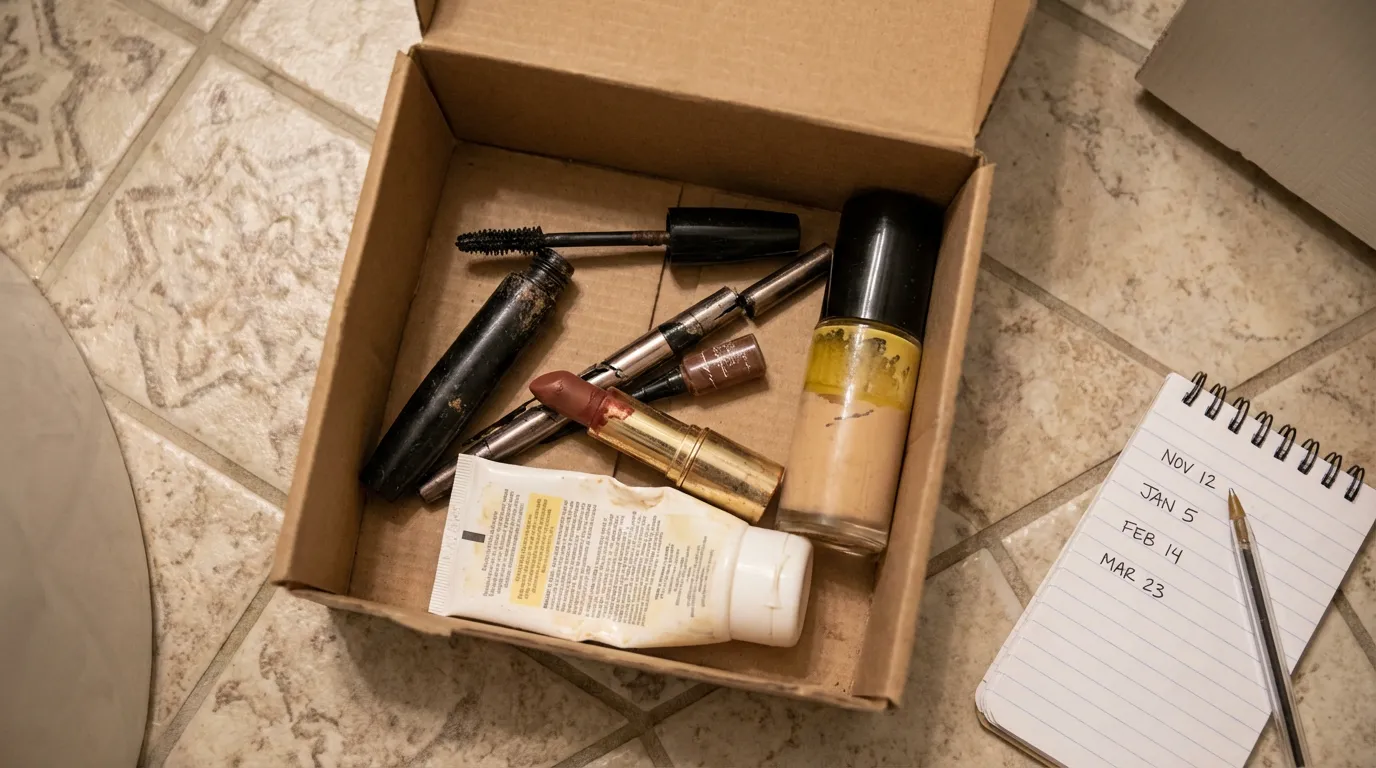
I have a mascara in my drawer I bought while pregnant with my second. He’s four.
I wrote a beauty column for six years and I still keep products past the point of reason, because the logic of motherhood is: I paid $28 for this, I used it twice, and now I’m supposed to throw it out? The expiration timelines you see online are written by brands that sell you new products. Some are real safety issues. Some are gentle encouragement. You deserve to know which is which.
How long does mascara last (and why you actually care)
Mascara is the one to take seriously. The FDA and most dermatologists agree: three months after opening, full stop. The tube is a warm wet tunnel you jab a wand into every morning. It grows staph, pseudomonas, and fungi that can cause styes, pink eye, and in rare cases fungal keratitis, which is as bad as it sounds.
Signs it’s time: smells off, clumps on the wand, dries faster than it used to, or you’ve had it longer than your kid’s current shoe size.
Liquid eyeliner: same rule, three to six months. Pencil eyeliner gets up to two years because sharpening shaves off the bacteria.
If you’ve been keeping a mascara longer than three months and your eyes have been fine, you got lucky. Don’t press it.
Makeup expiration dates for everything else
The rest is less dramatic. Here’s what the science actually supports, not what the brand wants you to buy more of.
| Product | Toss after opening | Watch for |
|---|---|---|
| Liquid foundation | 6-12 months | Separation, color shift to orange |
| Powder foundation, blush, eyeshadow | 12-24 months | Hard pan, weird smell |
| Cream blush, cream eyeshadow | 6-12 months | Crumbly or oily texture |
| Lipstick | 12-18 months | Stiff, hard to spread, off smell |
| Lip gloss | 12 months | Thick, sticky, separated |
| Pencil eyeliner | Up to 24 months | Dry tip, won’t glide |
Sources: Mayo Clinic, Cleveland Clinic, GoodRx.
Powders last longest because bacteria need water to grow. Anything creamy grows faster. Anything you dip a finger into grows faster still.
Skincare shelf life and the PAO symbol
Flip your moisturizer over. See the tiny open-jar icon with “6M” or “12M” inside? That’s the Period After Opening symbol, required in the EU, optional here, but most global brands print it. It tells you how many months the product is stable once the seal breaks.
General skincare rules that actually matter:
- Vitamin C serums. Three to six months. If it turns orange or brown, oxidized. Toss.
- Retinol and retinoids. Six months to a year if stored dark and cool. Air and light kill them.
- Moisturizer in a jar. Six months. Every finger dip drops in bacteria.
- Moisturizer in a tube or pump. 12 months.
- Cleansers. 12 months, because you rinse them off.
Store none of this in the bathroom if you can help it. Humidity and temperature swings break down actives faster. A bedroom drawer works. I keep mine in a clear acrylic organizer from Target ($18) on top of my dresser.
When to replace sunscreen
Sunscreen gets its own section because it’s the one that matters for your actual skin. The FDA requires sunscreen to stay stable for at least three years unopened. Past that, the chemical or mineral filters degrade and you get less SPF than the label claims.
If you’re using it correctly (a nickel-sized amount for your face, every day, reapplied outdoors), you should burn through a bottle every few months anyway. A single bottle lasting a whole summer is a sign you’re not using enough. See the sunscreens I actually reach for if you want starting points.
An expired or heat-cooked sunscreen (left in a hot car) can separate or smell rancid. That’s your cue.
The tools you forgot about
Everything that touches your face or hair has a clock too, and these are the ones people skip.
- Makeup brushes. Wash every 7-10 days according to the American Academy of Dermatology. Replace every two years, or when bristles splay or shed.
- Makeup sponges. Every three months, sooner if stained. They hold more bacteria than brushes.
- Toothbrush. Every three to four months per the ADA, and after you’ve been sick.
- Hairbrush. Six to twelve months. Wash monthly.
- Razor blades. Every five to ten shaves, or when it pulls instead of glides. Dull razors cause more nicks and ingrown hairs.
- Loofahs and shower puffs. Every three to four weeks. They hold water in a warm bathroom. Soap does not sterilize them.
The loofah thing got me. I’d had one since a bridal shower. I threw it out.
How to actually do the purge
You don’t need a full Saturday. You need twenty minutes and a trash bag.
- Dump every drawer, pouch, and travel bag onto a towel.
- Anything crusty, smelly, color-shifted, or separated: toss.
- Anything you haven’t touched in a year: toss. You won’t start now.
- Mascaras: toss anything older than three months.
- Write the open date on the bottom of anything new with a Sharpie.
The Sharpie trick is the only system that survives kids. You don’t need an app. You need a label.
One practical takeaway
If you only replace one thing this month, replace your mascara. Everything else has forgiveness built in. Mascara does not.
Then put a dot on the bottom of the new tube with today’s month. When July feels like a long time ago, you’ll know. And if you’re rebuilding your routine from the ground up, start with the five-minute version, not a shelf of products you’ll expire before you finish.