My 30 Day Beauty No Buy Challenge: What I Learned
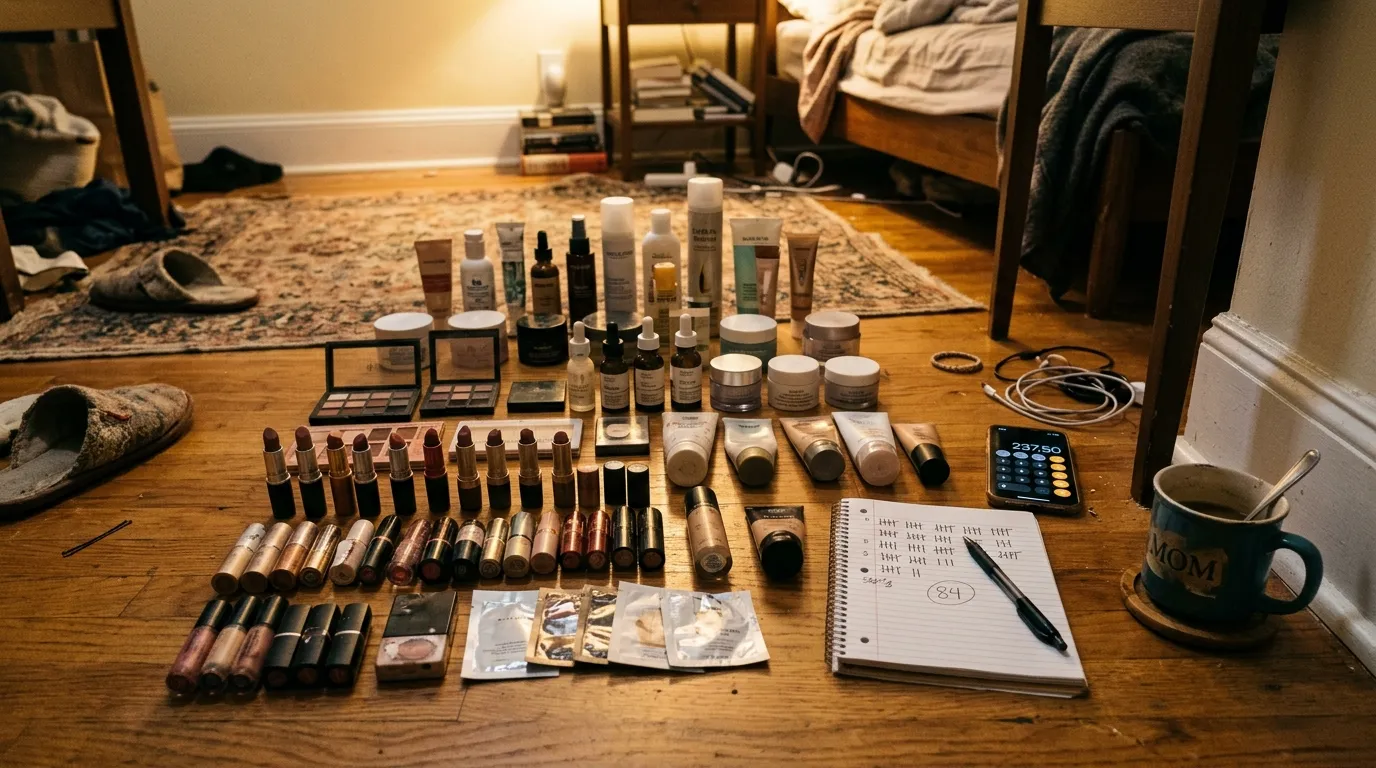
On a Tuesday night in August, 10:40 p.m., I lined up every beauty product I owned on the bedroom floor and counted. Forty-one, not counting the hotel shampoos hoarded in the closet. Half were duplicates. Three eyeshadow palettes I’d hit with a brush maybe six times each. A “life-changing” serum from 2023, still 90% full, expired by my own math. Rough retail total, added up in my phone: about $640. The next morning I started a 30 day beauty no buy challenge to find out how much of that shelf my face actually used.
I’m in good company. One in five Americans joined a no-spend challenge last year, per Chime data the Wall Street Journal reported, and searches for the term hit an all-time high (Fortune). The money involved is real: The Cut’s survey of beauty spending puts women in their 30s at $9,784 a year, treatments included. A product freeze only touches the counter part of that number, but the counter part is where the quiet multiplying happens: the $12 brow gel “since I’m here,” the cart filled at midnight and abandoned. Mine had become the routine.
The Beauty No Buy Rules I Set (and the Loopholes I Closed)
Most versions of this challenge share a spine: no new makeup or skincare unless a dermatologist orders it (InStyle’s rundown of the trend is a good starting point). I tightened mine into three rules, because the loopholes are where I usually lose.
Nothing gets replaced until it’s actually gone. “Almost out” doesn’t count. The samples drawer counted as owned, which turned 11 foil packets of moisturizer into forgotten backstock.
No browsing. Unsubscribed from retailer emails, deleted the shopping app, muted the haul accounts. “Just looking” is shopping with extra steps, so it counted.
One product open per category. The internet calls this project pan: work a product down to the bottom before opening the next. I had four lip balms in rotation. Four.
I wrote the exceptions down before day one so I couldn’t negotiate with myself at 11 p.m.: medicine, sunscreen, and mascara, which runs on a three-month safety clock no challenge overrides.
Four Weeks, Scored Honestly
Week one was suspiciously easy. Momentum did the work. I used my shelf like a job and rediscovered products I’d forgotten I owned.
Week two brought the first real test: a birthday gift code that expires whether you use it or not, plus a 20%-off email timed to the exact hour I finally sat down after bedtime. I closed both. The code expired unredeemed, which stung for a day and then felt like interest earned.
Week three was the hard one. My vitamin C serum ran out, and a nap-hour scroll ended with a full cart, $64, saved for later, as the app suggested. I gave it 24 hours. The cart didn’t survive the thinking.
Week four was quiet. No purchases, barely any urges. Somewhere in there the default flipped: I now scan the shelf for what I own before I get to the wanting part.
No Buy Month Skincare: The Week My Serum Ran Out
Day 17, the pump went hollow. Old me would have ordered a replacement that afternoon, probably the $42 one in the nice bottle. Instead I finished the foil packets, then went without for two weeks to see what happened. Nothing happened. My skin didn’t stage a protest. Comparing ingredient lists with my old $18 drugstore bottle, the expensive one’s advantage started and ended with the packaging, which matches what I found writing the splurge-vs-save guide: you pay a premium for texture and scent, and results barely move.
Only three products actually ran out in 30 days. Nine more came close. That ratio tells you how overbought the shelf was.
What Earned a Repurchase, and What Didn’t
On day 31 I bought three things, all from the list I’d kept on the fridge:
- Vitamin C serum, $18, drugstore. Earned on day 17.
- Brow gel, $8. The only makeup that ran out, and the one thing I use daily even when I’m late.
- Hair mask, $9. Winter is coming and my ends don’t negotiate.
Total: $35. What didn’t earn a repurchase: the $24 shine spray (a comb and a drop of conditioner do the same job), the fancy night cream, and the eyeshadow palettes, which outlasted the freeze untouched. Sample boxes built a chunk of this backlog; the subscription box math I ran last year explains why usable value and sticker value live so far apart.
The scoreboard: $87 in impulse orders avoided, a shelf down to products with jobs, and a changed default. People who run these freezes longer see bigger numbers. Shawna Ripari told Fortune her no-buy year saved about $10,000, $4,000 of it from makeup and clothes alone (Fortune). I’ll take the modest version. The lasting change is that I stopped mistaking wanting something for needing it.
If your bathroom shelf looks like my bedroom floor did that Tuesday night, count it tonight. The number does the arguing for you.