How to Cover Gray Roots Between Appointments
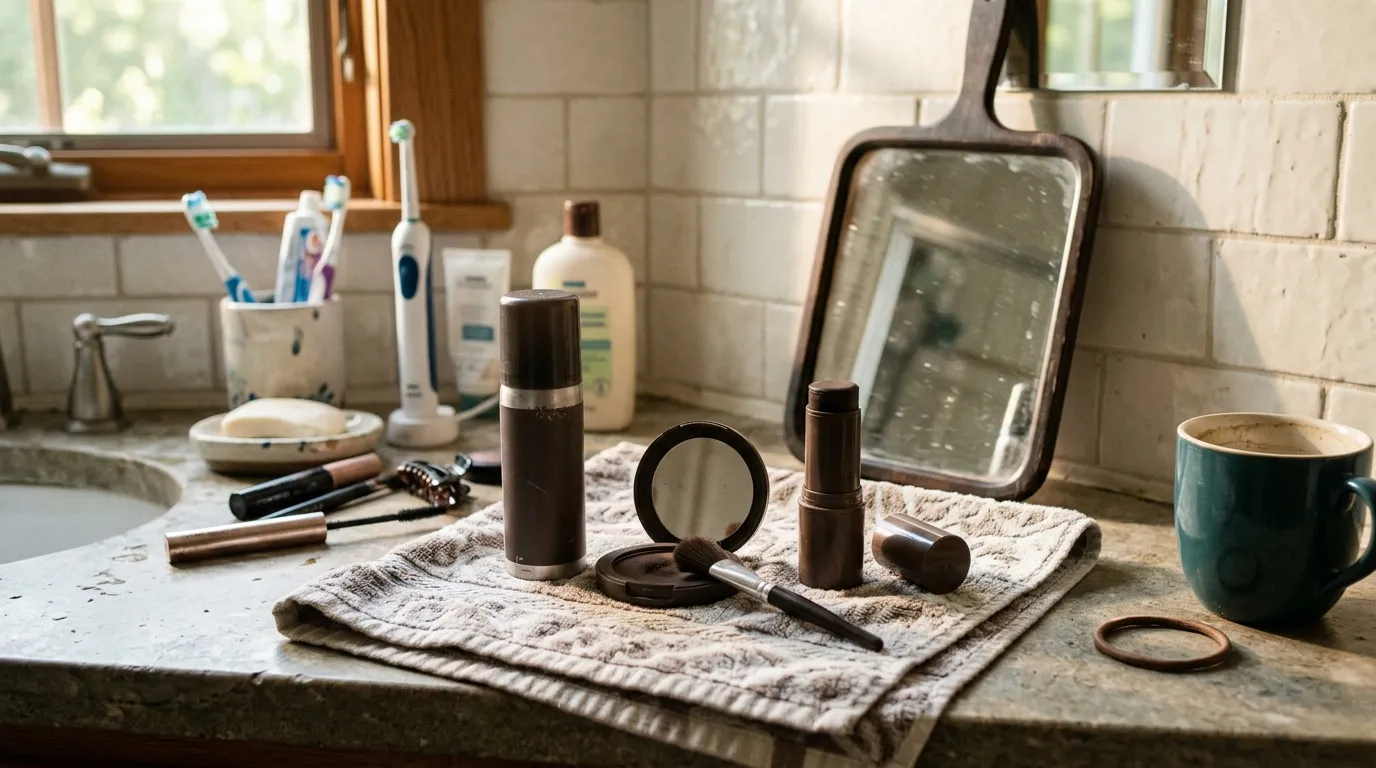
Your next color appointment is nine days out and the part line has gone silver anyway. You have two minutes, a bathroom counter, and zero interest in dyeing your whole head over a two-week problem. That is the exact job temporary root touch up products were built for: hide the line today, wash it out in a shampoo or three, book the real fix when the calendar opens up.
I skipped the guessing and went to the lab work: InStyle ran 24 of these through gray-root trials, and Good Housekeeping’s Beauty Lab tested the finalists for water resistance, transfer, and staying power. Here’s what held up.
Three Root Touch Up Products, Ranked by Staying Power
| Format | Best for | Time to apply | Holds up to |
|---|---|---|---|
| Powder | Part line, hairline, thinning spots | 1 to 2 min | Sweat and oily roots |
| Spray | A wide strip of growth | About 30 sec | Rain and splashes |
| Stick | Single stubborn grays | Under a minute | Water, until shampoo |
Powder is the default. InStyle’s testers found Color Wow’s $35 compact clings to roots through sweat and oily hair with no drying time, and GH’s lab liked that it doesn’t flake; press it on with the brush instead of sweeping, then leave it alone until it sets. The $10 Clairol powder compact is the drugstore version, and 83% of GH’s users said it blended naturally with their color.
Spray covers the most ground fastest. GH’s Beauty Lab doused gray hair swatches treated with Clairol’s $12 Color + Volume 2-in-1 spray and the color repelled the water and stayed put. For spot work, Style Edit’s $35 spray has an ultra-fine nozzle, though InStyle’s tester warns it can stain light-colored clothes.
Sticks are for the three grays that laugh at everything else. Bumble and bumble’s $35 Color Stick draws on like a crayon and resists water until you shampoo. It comes in brown and black only, so blondes should stay in the powder aisle.
Cover Gray Hair Between Colorings Without Going Muddy
The products are easy. The mistakes are what turn silver roots charcoal.
- Go one shade lighter than your dyed color. Colorist Hitomi Ikeda told Good Housekeeping that product overlapping your existing dye reads darker, and dark is the harder error to fix.
- Build in thin layers. Rita Hazan’s rule, via InStyle: a little goes a long way. Two light passes beat one heavy one.
- Apply to dry hair, then don’t touch it. Damp roots dilute the pigment and streak. Fingers in your hair before it sets erase it.
- Do it in the morning instead of before bed. GH heard from Oribe spray users who found transfer on pillowcases, and powder rubs off on collars overnight. Apply after the shower and let it set while you find the car keys.
Stretch Time Between Hair Color Appointments
Hair grows about half an inch a month (Live Science), which is why grays announce themselves around week three. Use that clock: weeks one and two, nothing; week three, powder on the part; weeks four and five, add the hairline; week six, spray the strip. Then book the next appointment before you leave the salon.
That schedule changes the money too. Stretching a touch-up cycle from five weeks to seven saves about three visits a year, per the math I ran on salon color pricing, and the concealer is doing the covering, so nobody can tell.
One boundary: concealer hides roots. It does nothing for faded lengths or a color line past an inch of growth. If that’s where you are, book a gloss and skip the fourth coat of spray. When the color calendar keeps collapsing entirely, a stylist who respects your schedule is worth more than anything in this post, and box dye stays in its lane for roots-only emergencies, as I learned the expensive way in my at-home color rules.
If you only do one thing: keep a powder compact in the drawer by the coffee maker, two minutes, part line first, and the countdown stops running your week.