How to Start Retinol Over 40 (Without the Flaky Mess)
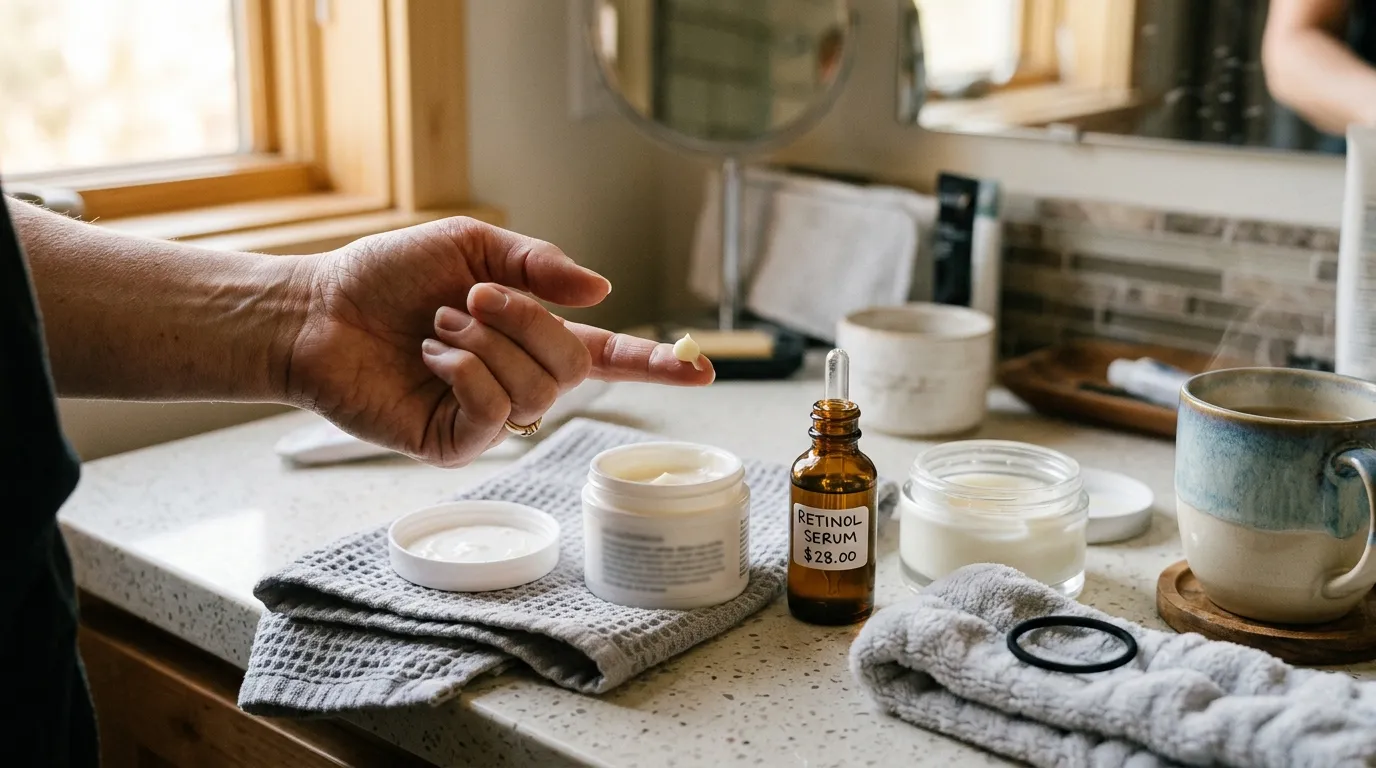
The first time I tried retinol, at 41, I did what the internet said. Clean skin, pea-sized amount, every night, no excuses. By night four my cheeks felt tight. By day six the skin beside my nose was peeling in tiny scrolls. By day nine the bottle went under the sink with the other abandoned projects, and I spent the next month apologizing to my face. If that sounds familiar, the problem was the schedule, and the schedule is fixable. Learning how to start retinol over 40 is mostly about unlearning the every-night advice written for 25-year-old skin.
Your skin at 40-plus is running a drier operation than it used to. Estrogen decline thins the barrier and drains its water-holding capacity, sebum production falls about 40% by your sixties, and skin collagen drops roughly 30% in the first five years of menopause, then keeps declining (American Academy of Dermatology, Journal of Cosmetic Dermatology, 2025). Around 50, skin pH shifts and skin becomes more sensitive and rash-prone (AAD). So the skin retinol has to land on is already dry, already thinner, and quicker to protest. I covered the full picture in what actually changes in perimenopause skin; this is the retinol-specific piece of that plan.
Why Retinol Over 40 Needs a Slower On-Ramp
Retinol still earns its spot at this age. It is the best-studied over-the-counter collagen builder there is, and dermatologists point to retinol and peptides as the ingredients that can rebuild collagen after menopause (AAD). The catch is that the same turnover speed that builds collagen also causes the flaking, and a compromised barrier amplifies all of it. Dermatologists reviewing retinoids are blunt about this: burning, scaling, and dermatitis are the main reasons people quit, and gentler retinoids like retinol are considerably less irritating than prescription tretinoin (Clinical Interventions in Aging review).
The professional version of the ramp-up is simpler than you’d think. “I advise them to use the least-intense retinoid formula they can find, and use it every other night to start, slowly building up,” says Georgetown dermatologist Tina Alster, MD. “If they don’t do that, they end up irritating their skin” (AAD). For already-dry skin I’d start slower than every other night. Twice a week.
Retinol for Beginners Over 40: Pick the Gentle Bottle
Shopping is the easy part, because for retinol for beginners, lower is better and cheap is fine. Over-the-counter retinol products run from 0.0015% up to 0.3%, and the concentration that best balances results against irritation has never been pinned down (Postepy Dermatologii i Alergologii, 2019). Annoying quirk: many drugstore labels don’t disclose the percentage at all (AAD), so pick one that states it. Anything at or under 0.3% is a beginner bottle. Save the 1% promises and prescription tretinoin, which is roughly 20 times stronger (same review), for later, or for a dermatologist’s hands.
The best retinol for sensitive skin, in my experience, is a low percentage in an oil base. Squalane-cushioned formulas spread easier and sting less. If your face runs red or reactive most days, check with a dermatologist before starting at all; the AAD specifically tells people with a lot of redness or inflammation to ask about alternatives first (AAD).
The Retinol Sandwich Method, Step by Step
The retinol sandwich method is the trick that keeps the flaky mess off your face. You buffer the retinol between two layers of moisturizer so it releases slower and hits a hydrated barrier instead of a stripped one. Dermatologists back the general principle: starting slowly and using moisturizer mitigates irritation (AAD). Here’s the night, start to finish:
- Cleanse gently and let skin dry completely. Damp skin pulls product in faster, which is the opposite of what we want on retinol nights. A $12 gentle cleanser, nothing foaming or “detox.”
- First layer: a thin coat of moisturizer. CeraVe Moisturizing Cream, about $19 for a tub that outlives most trends, or Vanicream at about $14. Wait a couple of minutes while you do something else, because everyone has something else.
- The filling: a pea-size dot of retinol for the whole face. Dot forehead, both cheeks, nose, chin, then spread. Keep it away from the eye corners, nose creases, and mouth corners, where irritation always starts.
- Top layer: another coat of moisturizer over everything. This is the bread that slows the filling down. You will still get results. Slower release means fewer side effects, and the side effects are what kill retinol routines.
Non-negotiable: retinol at night only, and SPF 30 every morning after, because retinoids make skin more sun-sensitive (AAD). Pick one you’ll actually wear; the face sunscreens that survive real mornings covers the ones that don’t sting or ball up.
The 12-Week Ramp-Up, Twice a Week to Start
Twice a week to start sounds insultingly slow. It’s the whole reason this works. The nights in between are buffer nights: plain moisturizer, no acids, no vitamin C, no scrubs. Vitamin C moves to mornings.
| Weeks | Retinol nights | How |
|---|---|---|
| 1-4 | 2 nights a week, say Tuesday and Friday | Full sandwich, pea-size, 0.25-0.3% or lower |
| 5-8 | 3 nights a week | Same sandwich, same amount, more often |
| 9-12 | Every other night | Same sandwich. Nightly only if weeks 9-12 were boring |
Boring is the goal. If any stage gets tight or flaky, you sit at that stage for another two weeks. The schedule bends; it doesn’t skip.
Retinol Purge and Flaking: What’s Actually Normal
Some light flaking around weeks two through six is standard. Retinol works by spurring faster turnover of surface skin cells (AAD), and the old cells have to go somewhere, usually onto your pillowcase. Your skin also adapts; studies of retinoid users found side effects ease substantially within about two weeks of steady use (Clinical Interventions in Aging). That’s the difference between flaking, which is temporary shedding, and damage, which looks like raw, burning, or swollen skin.
The retinol purge is the other thing people brace for. Faster turnover can surface clogs that were already forming, so you may see small breakouts in your usual breakout zones during the first month. Purge and irritation look identical from the bathroom mirror, and both get the same answer: slow down. Drop back a stage, keep the sandwich, and stop adding products. The one move that ruins a ramp-up is treating a rough patch with more actives.
Stop entirely, until your skin is calm for a full week, if you get burning that lingers, sting after moisturizer, or raw patches. And if your face has been red and reactive for years, that’s a rosacea conversation with a dermatologist before retinol enters it (AAD).
When the Furnace Complicates Things
Winter will test this routine more than any bottle will. Indoor heating pulls moisture out of already-thin skin, so when your cheeks start feeling tight by 3 PM, drop back to two sandwiched nights a week and lean on the cold-weather moves in winter skincare for moms. Slowing down for a season counts as consistency, whatever the internet’s night-counters say.
Start Here
Ranked, in case you skimmed: start at 0.25% to 0.3%, twice a week, fully sandwiched, with SPF 30 every morning. Add frequency before you ever add strength; the 12-week table above is the whole plan. Skip nightly starts, skip acids on retinol nights, and skip the $90 beginner serum, because a $9 one in squalane does the job while you learn. Expect flaking around week three, expect it to pass, and expect visible texture changes on the timescale the clinical trials actually used, which is months, not mornings (Clinical Interventions in Aging).
Do the math on your side: twice a week for a month, then three nights, then every other. About 34 sandwiched applications by week twelve. That’s the entire trick behind how to start retinol over 40, and it works because your skin gets four full weeks to agree to each new ask before you make the next one.